Website Design & Development
WordPress vs. Shopify vs. Custom Development: Which Is Right for Your Business?
Choosing between WordPress, Shopify, and custom development? This guide breaks down the pros and cons of each platform to help you decide which is right for your business goals.
 Tushar MondalCEO & Founder
- Published
- Reading time
- 6 min read
Listen · 6 min
Choosing the right platform to build your website on is one of the most critical decisions you'll make for your business's online presence. The short answer is: WordPress is best for content-heavy sites, Shopify is the undisputed king of ecommerce, and custom development is the ultimate choice for unique functionality and high-performance conversions.
But the right choice isn't just about features; it's about your budget, your technical resources, and where you see your business in five years. This guide will walk you through the pros and cons of each, so you can make an informed decision that aligns with your goals.
At a Glance: A Quick Comparison
Before we dive deep, here’s a high-level overview to frame your thinking.
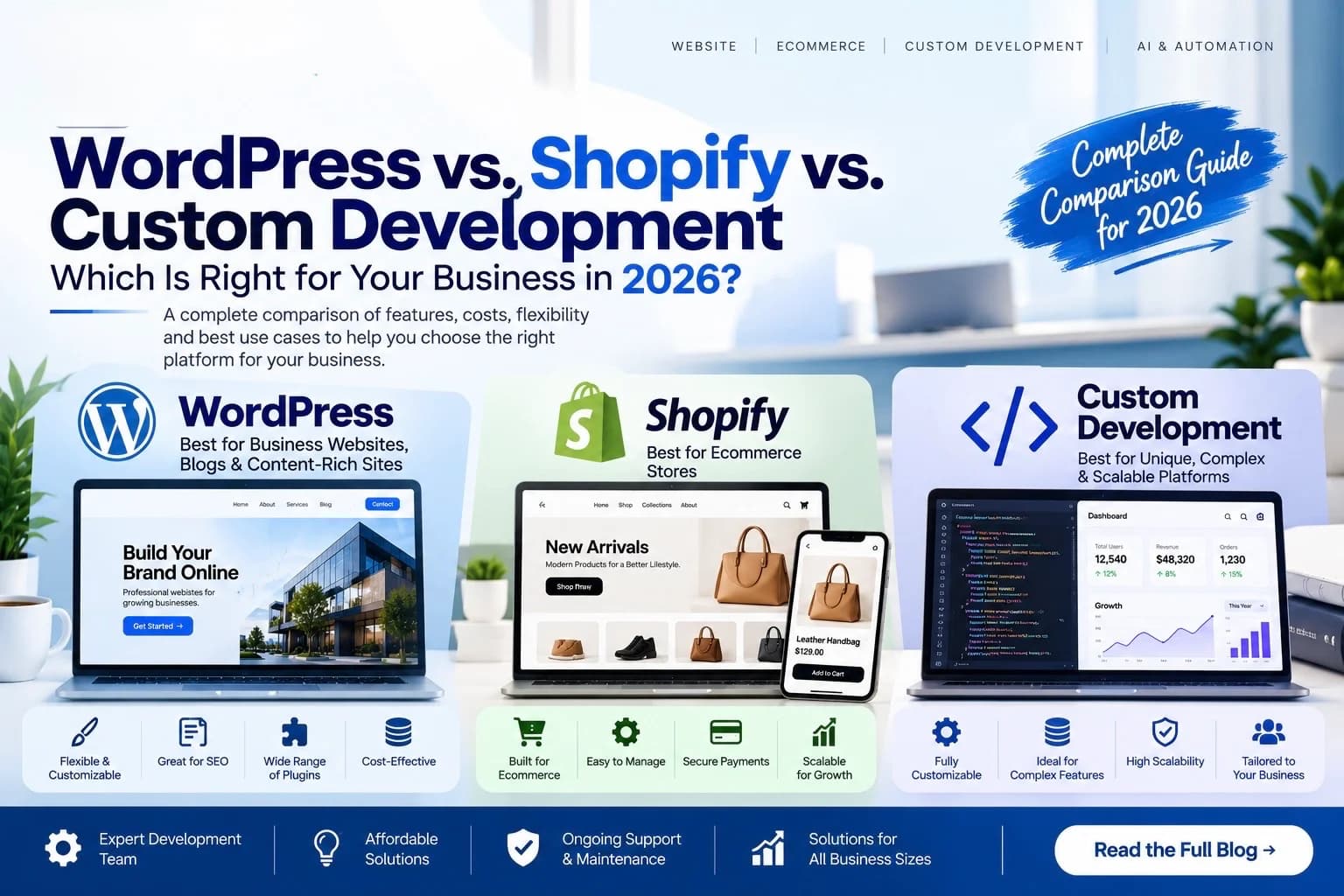
WordPress: Incredibly flexible and powers a massive portion of the web. It's a content management system (CMS) at its core, making it perfect for blogs, portfolios, and corporate sites. Its true power lies in its vast ecosystem of plugins and themes.
Shopify: A fully hosted, all-in-one ecommerce platform. It handles everything from hosting and security to payment processing, allowing you to focus on selling products. It’s designed to get an online store up and running quickly.
Custom Development: Building a website from scratch using modern frameworks like Next.js. This approach offers complete freedom, unparalleled performance, and the ability to build any feature you can imagine, tailored precisely to your business needs.
WordPress: The Flexible All-Rounder
WordPress started as a blogging platform but has evolved into a versatile CMS that can power almost any type of website. Its open-source nature means you have full control over your site, from the hosting environment to the code itself.
When WordPress Shines
WordPress is an excellent choice for:
Content-Driven Websites: If your strategy relies on blogging, publishing articles, and creating resource hubs, WordPress's content management capabilities are second to none.
Corporate and Brochure Sites: For businesses that need a professional online presence to showcase services, share company information, and generate leads, WordPress is a reliable workhorse.
Budget-Conscious Projects: With thousands of free and premium themes and plugins, you can build a functional website on a relatively small budget.
The Downsides to Consider
Maintenance Overhead: You are responsible for everything. This includes regular updates for the WordPress core, themes, and plugins, as well as managing security and backups. Failure to do so can leave your site vulnerable.
Performance Issues: It’s easy to slow down a WordPress site by installing too many poorly coded plugins or using a bloated theme. Achieving top-tier speed requires careful optimization.
The "Plugin Trap": While plugins add functionality, they can also create conflicts, security holes, and a disjointed user experience. You can end up with a site that feels patched together rather than cohesively designed.
Shopify: The Ecommerce Powerhouse
Shopify is not just a website builder; it's a complete commerce platform. It’s a hosted solution, which means they take care of all the technical aspects of running an online store, from server maintenance to security compliance.
When Shopify Shines
Shopify is the go-to platform for:
Businesses Focused on Selling Products: Whether you're selling physical goods, digital products, or services, Shopify's entire ecosystem is optimized for one thing: making sales.
Speed to Market: You can launch a professional-looking online store in a fraction of the time it would take to build a custom one. Its intuitive interface makes managing products, orders, and customers straightforward.
Reliability and Security: As a hosted platform, Shopify provides excellent uptime and handles all PCI compliance for payment processing, which is a huge weight off a business owner's shoulders.
The Downsides to Consider
Transaction Fees: Unless you use Shopify Payments, you'll pay an extra transaction fee on every sale, on top of what your payment gateway charges. This can eat into your margins as you grow.
Limited Customization: While themes are customizable, you are ultimately working within Shopify's framework. You can't change the core functionality or the checkout process (unless you're on the enterprise-level Shopify Plus plan).
Content is an Afterthought: Shopify's blogging and content management features are basic compared to WordPress. If content marketing is a central part of your strategy, you may find it restrictive.
Custom Development: The High-Performance Solution
Custom development means building a website from the ground up, tailored to your exact specifications. At Perfection International, our in house team specializes in using modern technologies like Next.js, React, and TypeScript to build websites that are incredibly fast, secure, and designed for conversion.
When Custom Development Shines
A custom-built website is the superior choice for:
Unique Functionality: If you need a feature that doesn't exist in a plugin or app, custom is the only way. This could be a complex booking system, a customer portal, or a unique product configurator.
Maximum Performance and SEO: Custom sites built with frameworks like Next.js are lean and optimized for speed. They have no unnecessary code, leading to near-perfect Google PageSpeed scores, which is a significant advantage for both user experience and search engine rankings.
Scalability: A custom site is built on a solid architectural foundation that can grow with your business. You can start with a simple marketing site and later add a full web application without having to rebuild from scratch.
Enhanced Security: With no third-party plugins or common platform vulnerabilities to exploit, custom websites present a much smaller attack surface for hackers.
The Downsides to Consider
Higher Initial Investment: Building a custom website requires a team of designers and developers, so the upfront cost is higher than setting up a template-based site.
Longer Development Timeline: A custom project involves a structured process of discovery, design, development, and testing, which takes more time than launching a pre-built solution.
Requires a Technical Partner: You can't just download a custom website. You need a trusted agency partner to build, maintain, and evolve it for you.
How to Choose: A Practical Checklist
Ask yourself these questions to find the right path:
What is the primary goal of my website? Is it to publish content (WordPress), sell products directly (Shopify), or generate leads with a unique user experience (Custom)?
What is my budget? Consider not just the initial build cost but the total cost of ownership, including monthly fees, maintenance, and transaction fees.
How much technical work am I willing to do? Are you comfortable managing updates and security (WordPress), or do you want a hands-off solution (Shopify)? Or would you rather have an expert partner handle it all (Custom)?
What are my plans for the future? Will you need to add complex features in 2 to 3 years? A custom build might save you from a costly and difficult migration later.
The Perfection International Approach: Why We Build Custom
We've worked with all these platforms, and for businesses that are serious about growth, we advocate for custom development. The reason is simple: control and performance.
When we build a site with Next.js, we are not limited by a theme or a plugin. Our design team creates a user experience in Figma that is laser-focused on your conversion goals, and our development team builds it pixel for pixel.
A custom-built site ensures what you approve in design is exactly what goes live. There are no compromises.
This approach allows us to build websites that are not just visually appealing but are also powerful marketing tools. They load instantly, are easily crawled by Google, and provide a seamless experience for your visitors. We can even integrate a user-friendly CMS, giving you the content editing power of WordPress without the performance and security headaches.
Your website is your most important digital asset. Choosing the right foundation is the first step toward building a powerful engine for business growth.
Know someone who should read this?