Paid Ads & Lead Generation
How to Turn Social Media Followers Into Paying Customers
Learn how to move social media followers from likes to leads to paying customers using paid ads, landing pages, retargeting, and CRM follow up.
 Tushar MondalCEO & Founder
- Published
- Reading time
- 8 min read
Listen · 8 min
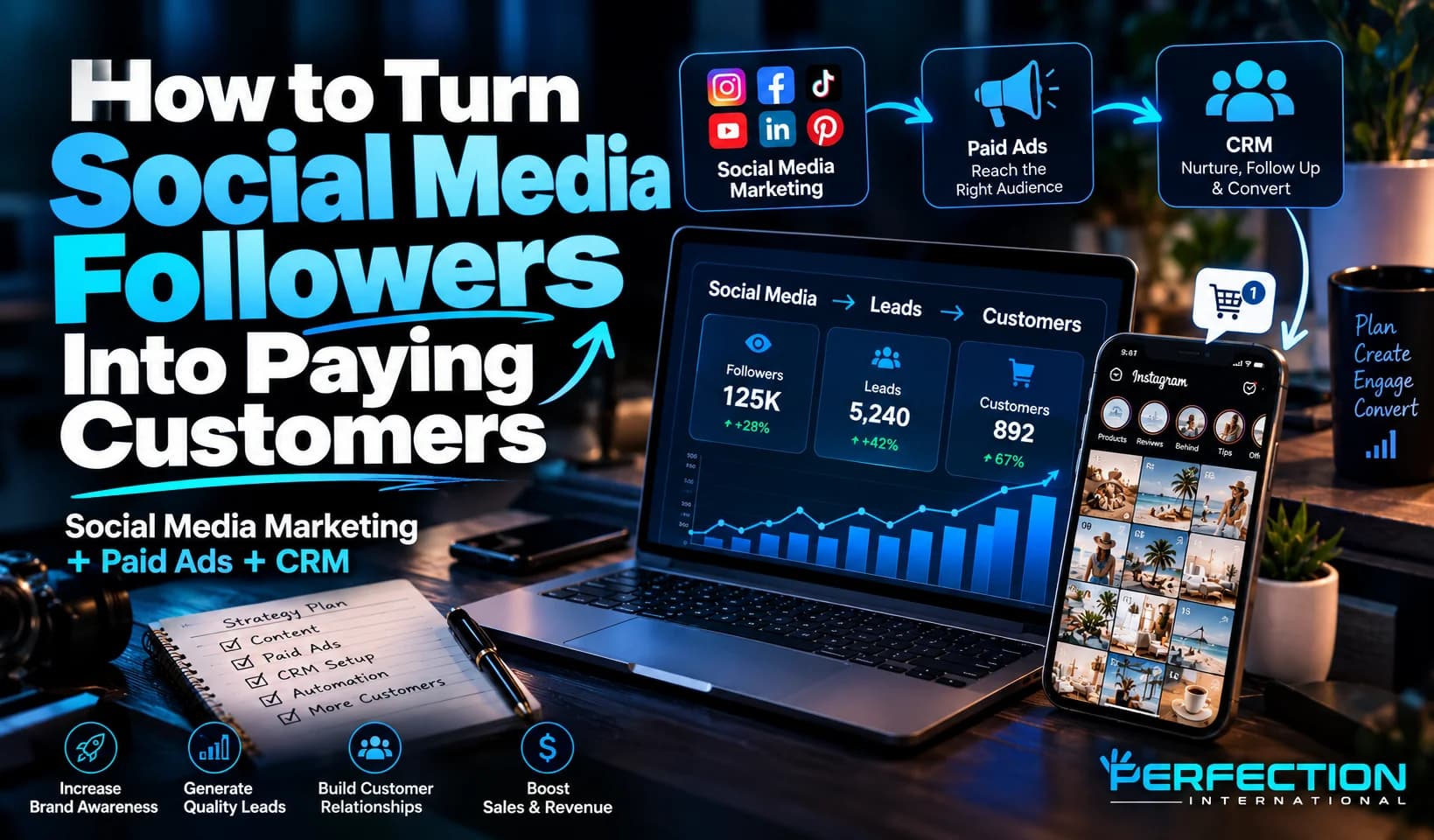
You turn social media followers into paying customers by giving them a clear next step after they engage, capturing their details with the right offer, retargeting warm audiences with paid ads, and following up fast through a CRM. Followers do not become buyers by accident. They become buyers when your content, ads, landing pages, and lead handling all work as one system.
That is where many businesses get stuck. They post regularly, get some likes, maybe a few comments, and then wonder why sales stay flat. Attention is useful, but attention by itself does not pay salaries. If you want revenue from social media, you need a path that moves people from casual interest to enquiry to conversation to purchase.
Why Followers Do Not Automatically Become Customers
Most followers are not ready to buy the first time they see your brand. Some are still learning what you do. Some are comparing options. Some like your content but have no urgent need yet. That is normal.
The mistake is treating social media as the full sales process. Social media is often the first touch, not the final one. A follower may watch three reels, save one post, visit your profile, and still not enquire. If there is no system to capture that interest and follow up, the opportunity disappears.
This is why brands need more than posting. They need a funnel.
Step 1: Know What Your Followers Actually Want
Before you spend on ads or build landing pages, get clear on why people follow you in the first place. Are they looking for tips, price guidance, before and after results, product demos, or proof that you understand their problem?
Look at your best performing posts and ask:
Which topics get saves and shares, not just likes?
Which posts bring profile visits or website clicks?
What questions do people ask in comments and DMs?
What objections keep coming up before someone buys?
This matters because the content that attracts attention is not always the content that drives action. A funny reel may grow reach, but a post answering "how much does this cost" or "how do I choose the right option" may bring better leads.
Step 2: Create One Clear Offer for Warm Audiences
If you want followers to become customers, you need a simple offer that gives them a reason to raise their hand. That offer depends on your business, but it should reduce friction and make the next step feel easy.
Good examples include:
A free consultation
A quote or estimate
A product demo
A limited time package
A downloadable checklist or guide
A callback from your team
The key is focus. Do not send people to a generic page with ten different choices. Give them one action to take.
For example, if you run ads for a clinic, the offer might be "Book a consultation". If you sell software, it might be "Request a demo". If you are a service business, it might be "Get a custom quote". Clear beats clever.
Step 3: Use Paid Ads to Reach the Right Followers Again
Organic reach is useful, but it is not enough if you want predictable lead flow. Paid ads help you stay in front of people who already know your brand and are more likely to act.
This is especially important on Facebook and Instagram, where many followers will never see most of your posts. With Paid Ads & Lead Generation, you can build retargeting campaigns for people who engaged with your page, watched your videos, visited your website, or opened a lead form but did not submit.
These warm audiences usually respond better than cold traffic because they already have context. They have seen your content. They recognize your brand. Your ad does not need to introduce everything from zero.
A simple campaign structure can look like this:
Promote helpful or trust building content to a broad audience.
Retarget engaged users with a stronger offer.
Send traffic to a dedicated landing page or lead form.
Track every enquiry properly so you know which campaign is bringing quality leads.
Step 4: Match the Ad to the Stage of the Buyer
Not every follower should see the same ad. Someone who discovered you last week needs a different message than someone who has been watching your content for two months.
For newer followers
Use ads that build confidence quickly. Show your service clearly, explain who it is for, and answer common doubts. Short videos, customer pain point posts, and simple benefit led creatives work well here.
For warm followers
Use ads that push action. This is where consultation offers, quote requests, demo bookings, and retargeting campaigns make sense. These people already know you. Now they need a reason to act today.
For past leads or site visitors
Use reminder ads. Many people do not convert on the first visit. Retargeting helps bring them back when they are ready.
This is where ad creative testing matters. Sometimes the audience is right, but the message is wrong. Testing different hooks, visuals, and calls to action helps you learn what actually moves people.
Step 5: Send Traffic to Pages Built for Conversion
A common reason social media traffic does not convert is that the landing page is weak. The ad may be strong, but if the page loads slowly, looks confusing, or asks for too much too soon, people drop off.
A good landing page should:
Match the promise made in the ad
Explain the offer in simple language
Show trust signals such as reviews, process, or past work
Have one clear form or call to action
Load fast on mobile
This is why ads and landing pages should be planned together. If your ad says "Get a free quote for interior design", the page should not open with a generic brand story. It should continue that exact thought and make the form easy to complete.
At Perfection International, our in house team builds landing pages alongside campaigns so the message stays consistent from ad to page to lead form.
Step 6: Capture Leads Without Creating Extra Friction
Not every campaign needs to send people to a website first. In some cases, lead forms inside Facebook or Instagram can work well, especially for simple offers. In other cases, a landing page gives you more room to educate and qualify.
The right choice depends on your sales process.
If speed matters and the offer is simple, native lead forms can reduce friction. If lead quality matters more and buyers need more detail before enquiring, a landing page is often better.
Either way, keep the form focused. Ask for what your team truly needs to follow up. Too many fields can lower conversion. Too few can bring poor quality leads. A balanced form often includes name, phone number, email, and one qualifying question tied to need, budget, or timeline.
Step 7: Use a CRM So No Lead Gets Wasted
Getting the lead is only half the job. What happens after the form submission often decides whether the lead becomes a customer.
Many businesses lose money here. Leads come in from Meta or Google, but nobody calls quickly. There is no tracking. No notes. No follow up sequence. By the time someone responds, the buyer has already spoken to a competitor.
A CRM solves this by keeping every enquiry organized. It helps your team see where the lead came from, what they asked for, and what happened next. With CRM & Marketing Automation, you can also trigger instant notifications, assign leads to the right person, and send follow up messages automatically.
That matters because speed and consistency improve conversion. A good system can help you:
Alert your sales team the moment a lead comes in
Send an instant confirmation by email or WhatsApp
Track follow up calls and status
Nurture leads who are not ready yet
Measure which campaigns bring leads that actually close
Step 8: Optimize for Quality, Not Just Cheap Leads
A low cost per lead looks nice in a report, but it does not always mean the campaign is working. If the leads are irrelevant, unreachable, or not serious, cheap leads become expensive very quickly.
Better optimization means looking at what happens after the form fill. Which campaigns bring people who answer the phone? Which audiences book appointments? Which ads bring buyers, not just browsers?
This is where proper tracking matters. With tools like Meta Pixel, Google Tag Manager, and GA4, you can connect ad clicks to real actions and make smarter decisions. The goal is not just more leads. The goal is more qualified enquiries your team can convert.
A Simple Funnel You Can Actually Use
If you want a practical version of this system, start with this:
Post content that answers real buyer questions.
Identify the audience segments engaging with that content.
Run retargeting ads to warm followers and site visitors.
Send them to one focused landing page or lead form.
Connect every enquiry to a CRM.
Follow up quickly and track which leads turn into sales.
Use that data to improve your ads, creative, and offer.
This approach works because it respects how people actually buy. They rarely go from follower to customer in one jump. But when you guide them step by step, social media starts producing real business results.
Final Thought
A large follower count looks good, but a strong conversion system is better. If your brand already has attention on social media, the next growth win usually comes from turning that attention into action. That means better offers, better landing pages, better retargeting, and better follow up.
When those pieces work together, social media stops being just a visibility channel and starts becoming a reliable source of leads and sales.
Know someone who should read this?