Paid Ads & Lead Generation
7 AI Automations That Can Generate More Leads
Learn how AI automations can turn your paid ads and website traffic into more qualified leads, from instant follow up to smarter retargeting and lead scoring.
 Tushar MondalCEO & Founder
- Published
- Reading time
- 7 min read
Listen · 7 min
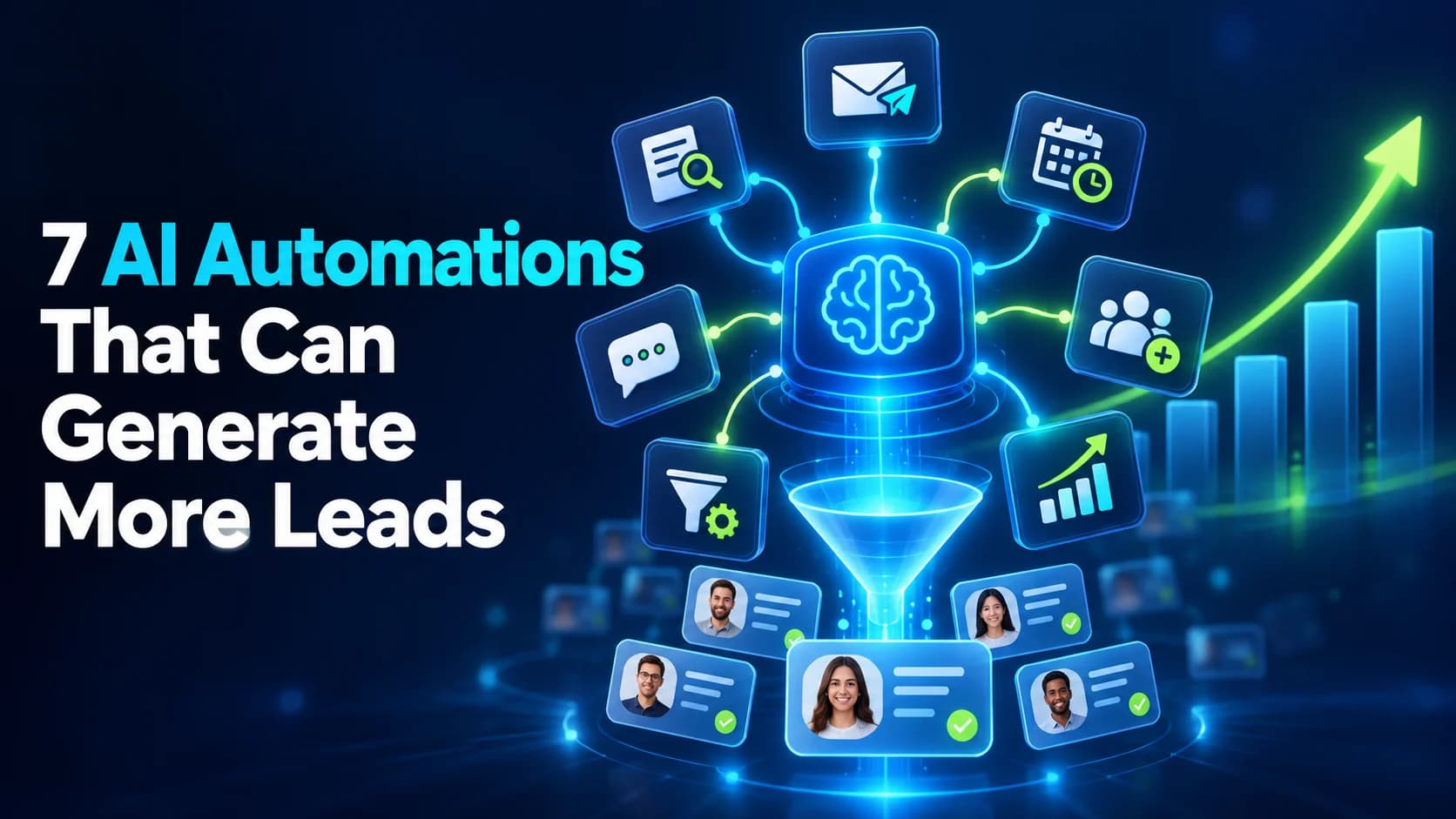
If you are already spending on Facebook, Instagram or Google ads, AI automation is how you squeeze more leads out of the same budget instead of just increasing spend. The biggest gains usually come after the click: faster follow up, better qualification, and smarter retargeting. Here are seven practical AI automations that connect directly to your paid campaigns and turn more of your traffic into qualified enquiries you can actually measure.
1. Instant Lead Follow Up That Never Sleeps
The faster you respond to a new lead, the more likely they are to convert. But most businesses take hours or even days to reply, especially when enquiries come in at night or on weekends. AI automation fixes this by responding the moment someone submits a form or clicks your ad.
When a lead comes in from a Facebook lead form or a Google Ads landing page, an automated workflow can send a personalized email or WhatsApp message within seconds. It can answer basic questions, share a brochure or pricing guide, and even book a call directly into your calendar. The lead feels heard immediately, and your sales team only steps in when the person is ready to talk.
This works best when your ad creative, landing page and follow up message are all aligned. If your ad promises a free quote, the automated reply should deliver that quote or explain the next step clearly. Tools like Meta Ads Manager and Google Ads can connect directly to CRM and automation platforms so the handoff is seamless.
2. AI Chatbots That Qualify Leads on Your Landing Pages
Not every visitor is ready to fill out a form, but many will engage with a chatbot if it answers their questions quickly. AI chatbots can sit on your landing pages and qualify visitors in real time by asking a few simple questions: what service they need, their budget range, their timeline, and their contact details.
The chatbot can then route hot leads straight to your sales team, send warm leads a follow up sequence, and filter out people who are not a fit. This means your ad spend goes further because you are capturing leads who would have otherwise bounced without converting.
For businesses running paid campaigns, chatbots also improve conversion rates on landing pages by removing friction. Instead of making someone hunt for information or wait for an email reply, the bot gives instant answers. Our AI chatbot setups are built to match your brand voice and integrate with your existing lead tracking so nothing falls through the cracks.
3. Predictive Lead Scoring Based on Behavior
Not all leads are equal. Someone who visits your pricing page three times and downloads a case study is far more valuable than someone who bounced after five seconds. AI can score leads automatically based on their behavior, so your sales team knows who to call first.
This works by tracking actions like page visits, time on site, email opens, form submissions and ad clicks, then assigning a score to each lead. High scoring leads get flagged for immediate follow up. Low scoring leads go into a nurture sequence instead of wasting your team's time.
When you connect this to your paid campaigns, you can also feed conversion data back into Meta Ads Manager and Google Ads. The platforms use that signal to find more people who behave like your best leads, which improves targeting over time. This is where tracking and analytics becomes critical, because the AI is only as smart as the data you give it.
4. Automated Retargeting Based on Intent Signals
Most people do not convert on their first visit. Retargeting brings them back, but AI makes it smarter by adjusting who sees your ads based on what they actually did on your site.
For example, someone who visited your service page but did not fill out the form might see a testimonial ad. Someone who started the form but did not finish might see a limited time offer. Someone who completed the form but has not booked a call yet might get a reminder ad with a direct calendar link.
AI automation can segment your retargeting audiences automatically based on these intent signals, then serve the right creative to each group. This keeps your ads relevant and reduces wasted spend on people who are not interested. It also means your cost per lead drops over time because you are not showing the same generic ad to everyone.
Meta Pixel and Google Tag Manager make this possible by tracking user behavior and feeding it back into your ad platforms. The automation layer sits on top, adjusting audiences and creatives without manual work every day.
5. Dynamic Ad Creative Testing at Scale
One of the biggest challenges in paid ads is knowing which creative will work. AI automation can test dozens of ad variations at once, then shift budget toward the winners automatically.
Instead of manually creating five ads and checking performance every few days, you can use AI tools to generate multiple headline, image and call to action combinations, launch them all, and let the platform optimize in real time. The system learns which messages resonate with which audience segments and adjusts accordingly.
This is especially useful for lead generation campaigns where small changes in copy or design can have a big impact on conversion rates. A headline that works for one service might flop for another. AI testing finds those patterns faster than any human can.
The key is feeding the system enough data. If your budget is too small or your tracking is broken, the AI cannot learn properly. That is why proper setup with Meta Pixel, GA4 and conversion tracking is non negotiable before you start scaling creative tests.
6. Lead Nurture Sequences That Adapt to Responses
Most leads are not ready to buy immediately. They need time, information and trust. AI powered nurture sequences can send the right message at the right time based on how each lead interacts with your emails, WhatsApp messages or SMS.
If someone opens every email and clicks your case study link, the system might fast track them to a sales call offer. If someone ignores three emails in a row, it might switch to a different angle or pause the sequence to avoid annoying them. If someone asks a question via reply, the AI can route that to a human or answer it automatically if it is a common query.
This kind of adaptive nurture keeps your brand top of mind without being pushy. It also means fewer leads slip through the cracks just because your team got busy. When combined with CRM and marketing automation, every lead gets a consistent experience from first click to final sale.
7. Form Abandonment Recovery
A surprising number of people start filling out your lead form but never finish. Maybe they got distracted, maybe the form felt too long, or maybe they just wanted to think it over. AI automation can bring these people back.
When someone abandons a form, an automated workflow can trigger a follow up email or retargeting ad within a few hours. The message might remind them what they were interested in, offer to answer questions, or simplify the ask with a shorter form or a direct phone number.
Some businesses also use exit intent popups powered by AI to catch people before they leave. If someone moves their cursor toward the back button, a well timed message can offer a discount, a free consultation or a downloadable guide in exchange for their email.
This works best when your landing pages are fast and mobile friendly. If your page takes too long to load or the form is clunky on a phone, no amount of automation will save it. That is why our web design and development team builds landing pages specifically for conversion, with speed and simplicity built in from the start.
How to Get Started Without Overwhelming Your Team
You do not need to implement all seven automations at once. Start with the one that solves your biggest bottleneck. If leads are coming in but nobody is following up fast enough, start with instant lead follow up. If your cost per lead is high and you are not sure why, start with creative testing and retargeting.
The most important step is making sure your tracking is set up correctly. AI automation is only as good as the data it runs on. If your Meta Pixel is not firing properly, your Google Ads conversions are not tracked, or your CRM is not synced, the automations will not work. Get the foundation right first, then layer on the AI.
It also helps to work with a team that understands both paid ads and automation. The best results come when your campaigns, landing pages, follow up sequences and CRM are all designed together, not bolted on as afterthoughts.
Know someone who should read this?