Video Editing
Video Editing vs Graphic Design: Which Does Your Brand Need?
Video editing vs graphic design: learn what each one does, when to use them, and how to decide where your marketing budget will work hardest.
 Tushar MondalCEO & Founder
- Published
- Reading time
- 7 min read
Listen · 7 min
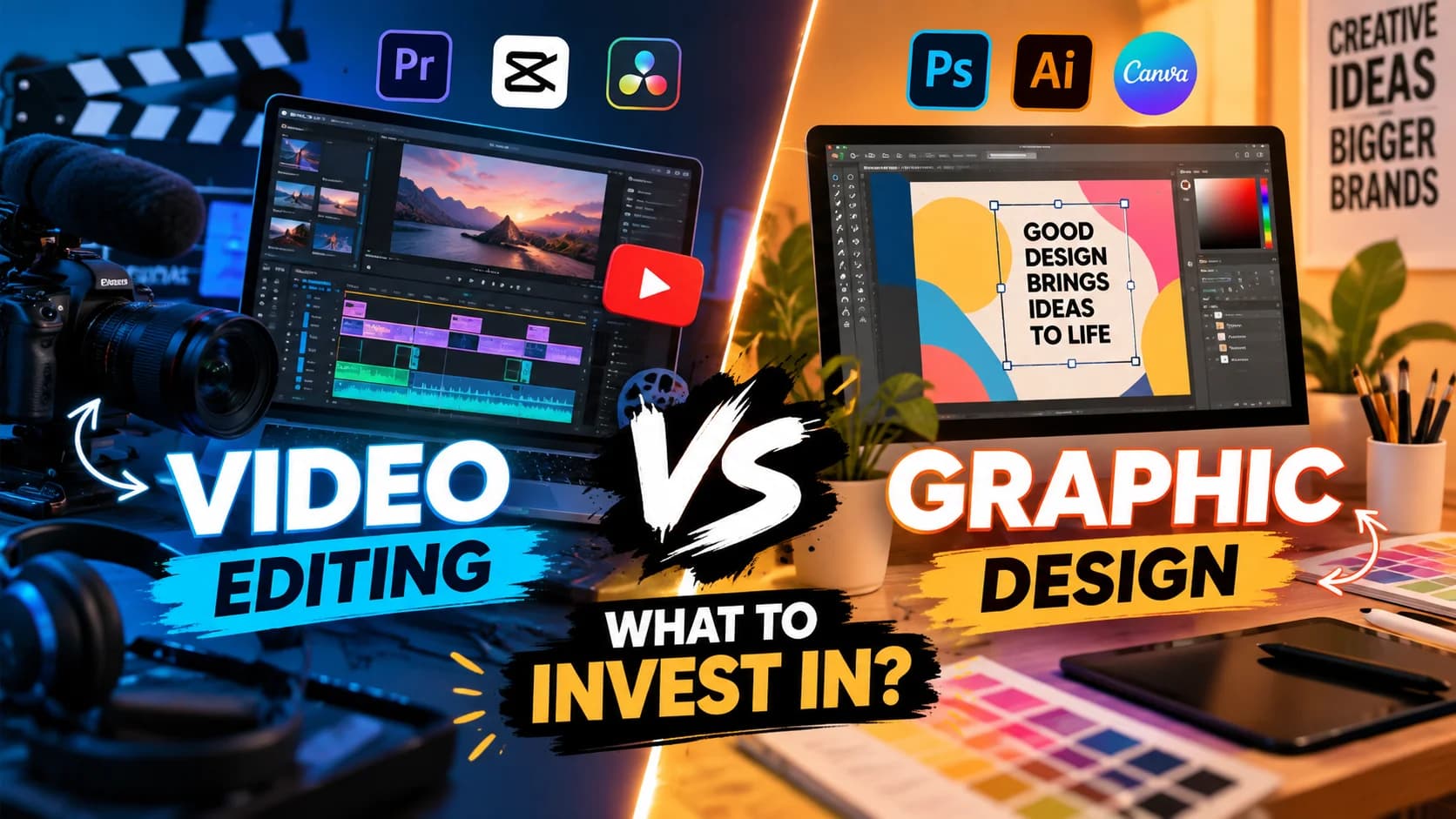
If you are trying to decide between video editing and graphic design, the honest answer is that they solve different problems. Graphic design builds the static visual identity of your brand: logos, social posts, banners, brochures, ads. Video editing turns raw footage into content that moves, holds attention, and performs on platforms like Instagram, TikTok and YouTube. Most growing brands eventually need both. The question is which one to prioritize right now, and that depends on where your audience spends time and what your marketing is trying to achieve in the next few months.
This post breaks down what each discipline actually does, where each one wins, and how to make a sensible call for your business.
What Graphic Design Actually Covers
Graphic design is every visual your brand puts out that does not move. It is the foundation of how people recognize and remember you.
A good graphic design setup for a business typically includes:
Logo and brand identity: colors, fonts, and the rules that keep everything consistent
Social media creatives: static posts, carousels, cover images, story templates
Ad creatives: banners and images for Meta, Google Display and other paid campaigns
Marketing collateral: brochures, flyers, presentations, email headers, packaging
Website graphics: hero images, icons, illustrations, banners
Design work is what makes your brand look established and trustworthy before anyone reads a word. When a potential customer lands on your profile or website, the quality of your design is the first signal they get about the quality of your business.
If your visuals look inconsistent or dated, that is a design problem, and no amount of video will fix it. Our graphic design team handles exactly this kind of foundational work.
What Video Editing Actually Covers
Video editing takes raw footage and turns it into finished content built for a specific platform. It is not just cutting clips together. Good editing is what separates a video people skip in one second from one they watch to the end and share.
A professional editing workflow usually includes:
Hook crafting: the first 1 to 3 seconds decide whether someone keeps watching, so the opening is engineered, not accidental
Cutting and pacing: removing dead air, tightening the rhythm, keeping energy up throughout
Captions and subtitles: standard practice, because most short form video is watched on mute
Music and sound: licensed tracks, sound effects and audio leveling that fit the platform
Motion graphics: animated text, logo stings, lower thirds and transitions that make content look polished
Platform formatting: a Reel, a YouTube Short and a Facebook video ad have different specs, lengths and viewer expectations
The formats this covers are Instagram Reels, TikTok videos, YouTube Shorts, Facebook videos, promotional videos and ads. Each one is edited for the platform it will live on, not exported once and posted everywhere.
Where Each One Wins
The fastest way to choose is to look at what each format does better than the other.
Graphic design wins when
You are building or refreshing your brand identity from scratch
You need ad creatives for image based placements, which still convert well on Meta and Google Display
You need assets that stay useful for months or years, like a logo, a pitch deck or packaging
Your sales process depends on documents: proposals, brochures, catalogs, presentations
You are posting carousels and infographics, which still earn strong reach on Instagram and LinkedIn
Video editing wins when
You want reach on Instagram, TikTok or YouTube, where short form video gets the most distribution
Your product or service is easier to show than to describe: food, fitness, real estate, beauty, events, demos
You are building personal brand authority for a founder or expert who can speak on camera
You want retargeting content, because video viewers are a warm audience you can advertise to later
Your competitors are already publishing video and you are invisible by comparison
Here is the pattern we see most often: brands that are invisible need video, because video is what the algorithms push to new audiences. Brands that look unprofessional need design first, because attention without credibility does not convert.
The First Three Seconds Problem
This is where video editing becomes its own discipline rather than an extension of design.
A static image earns attention through composition and copy. A video has to earn attention continuously, starting with the opening frame. If the first 1 to 3 seconds do not stop the scroll, nothing after them matters.
That is why professional editing focuses so heavily on hooks: a bold visual, a pattern interrupt, on screen text that states the payoff, or a question the viewer wants answered. Then the pacing has to hold that attention through the middle, and the ending has to land a clear call to action.
This is a different skill set from static design. A great poster designer is not automatically a great editor, because editing is about timing, rhythm and sound as much as visuals. When you hire for video, look at whether the editor talks about hooks, retention and captions, or only about making things look nice.
Can One Person or One Agency Do Both?
Yes, and for most small and mid sized businesses, that is the practical setup. The two disciplines share the same brand system: same colors, same fonts, same tone. When one team handles both, your static posts and your videos look like they come from the same company, which is harder than it sounds when freelancers hand work off to each other.
The typical workflow looks like this:
Design establishes the brand system: logo, colors, fonts, templates
You film raw footage on a phone or camera, often with a simple shot plan
Editing turns that footage into Reels, Shorts, ads and promos using the brand system
Design produces the static creatives that support the same campaigns: covers, carousels, ad images
Both feed the same content calendar, so every campaign has moving and static assets
Most brands that publish video seriously do it on a monthly plan, so there is always a queue of edited, ready to post content instead of a scramble every week.
How to Decide Where to Spend First
If you can only invest in one this quarter, work through these questions:
Does your brand look credible right now? If your logo, feed and website look inconsistent, fix design first. Video amplifies whatever impression your brand already makes.
Where does your audience discover new brands? If the answer is Reels, TikTok or Shorts, video is the priority. If it is Google search and referrals, design and your website matter more.
Can you produce raw footage? Video editing needs input. If you or your team can film simple clips on a phone, editing is viable. If nobody will ever get on camera, start with design and motion graphics instead.
What are your competitors doing? If they are publishing video weekly and you are not, that gap compounds. If nobody in your niche does video well, that is an opening.
What does your funnel need? Cold audiences respond to video. Warm audiences comparing options respond to polished design: decks, case studies, brochures.
For most consumer facing brands in 2025, the answer ends up being video first, design in parallel, because the brand system has to exist for the videos to look right anyway.
What Working With an Editor Looks Like
If you have never outsourced editing, the process is simpler than people expect:
You send raw clips, or plan the shoot together before you film
The editor handles cutting, captions, music, graphics and hooks
You review a draft, request changes, and approve the final
Finished videos arrive formatted for each platform you publish on
You do not need a studio or a camera crew. A phone, decent light and a clear idea of what you want to say are enough to start. The editing is what turns that raw material into something people actually watch.
The Bottom Line
Video editing and graphic design are not competitors. Design makes your brand credible; video makes it visible. If your visuals are weak, start with design. If your brand looks fine but nobody is finding you, short form video is where the attention is, and professional editing is what makes that attention stick past the first three seconds.
The brands growing fastest on social right now treat the two as one system: one brand identity, expressed in posts people see and videos people watch.
Know someone who should read this?
Written by
Tushar Mondal
CEO & Founder
Web and mobile app developer for Android and iOS.
More from Tushar →
Related service
Video Editing
Short form content that performs
See how we help →
See it in action
Game day social content for Oklahoma City Spark
7 Supplied assets. Social media content creation and video editing for an AUSL softball team.
Read the Oklahoma City Spark (AUSL) case study →